Navigating the EV transition: a strategy for independent workshops
Electric drivetrains change the maths of the service bay — but not overnight, and not in the way many owners fear. A practical strategy for the mixed-fleet decade ahead.
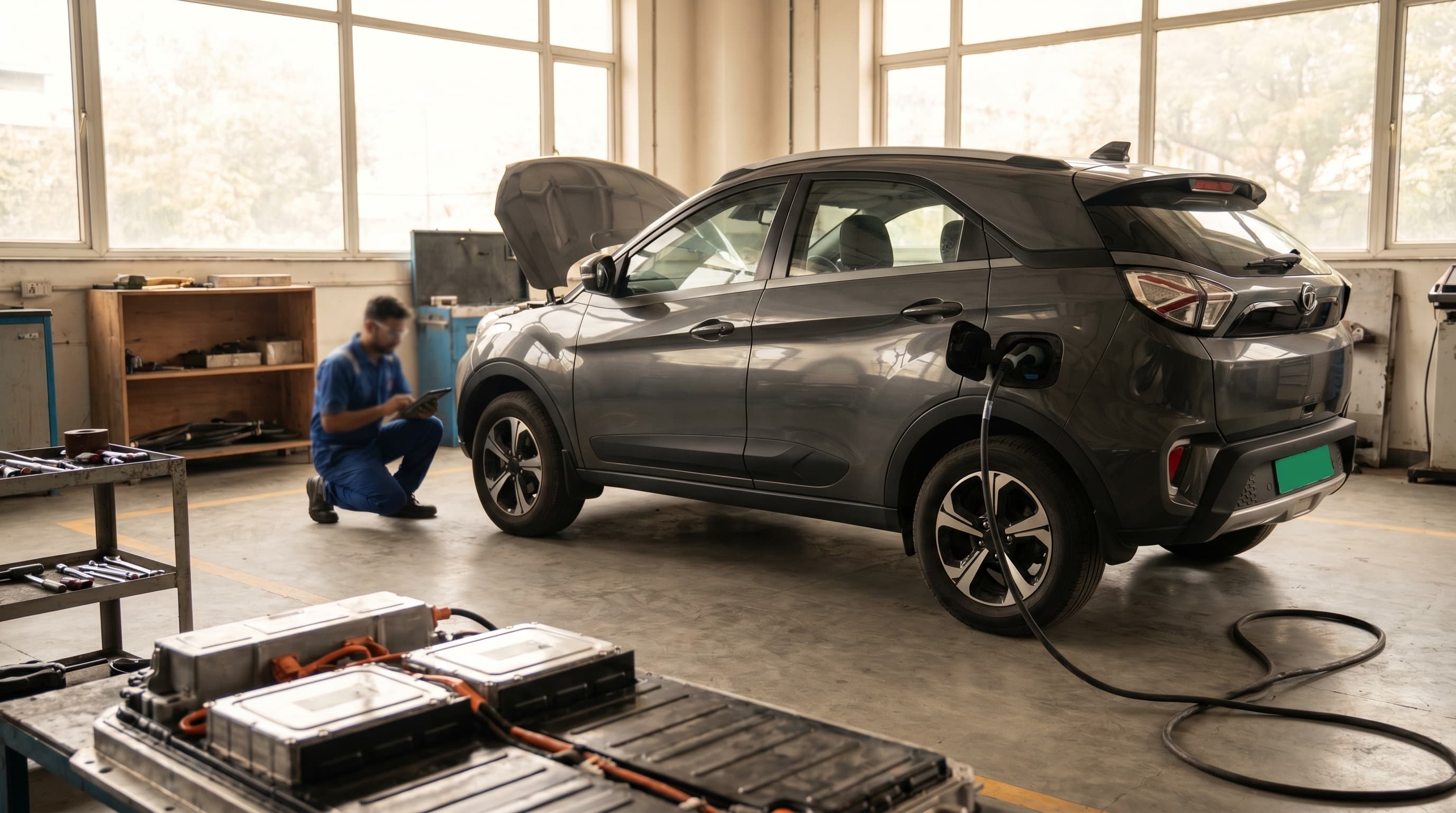
Electric and hybrid vehicles are no longer a distant prospect on Indian roads — they are arriving in service bays today. For independent multi-brand workshops, that raises an understandable worry: if EVs need less servicing, where does the business go? The honest answer is that it moves rather than disappears — and the workshops that plan for the shift will do better than those that wait.
A slope, not a cliff
Internal-combustion vehicles are not vanishing. Hybrids are growing as a bridge technology, and the existing parc of petrol and diesel cars will need service for many years yet. The realistic picture for the decade ahead is a mixed fleet — ICE, hybrid and EV — passing through the same bays. The workshop that serves that fleet well has a long runway. The real risk is standing still, not moving too soon.
Where the revenue actually moves
It's true that EVs remove a chunk of familiar work — oil and filter changes, timing belts, exhausts and much of the engine. But they keep, and often increase, other work, and add new services on top:
- Tyres, brakes, suspension and steering — heavier vehicles with instant torque can wear these harder.
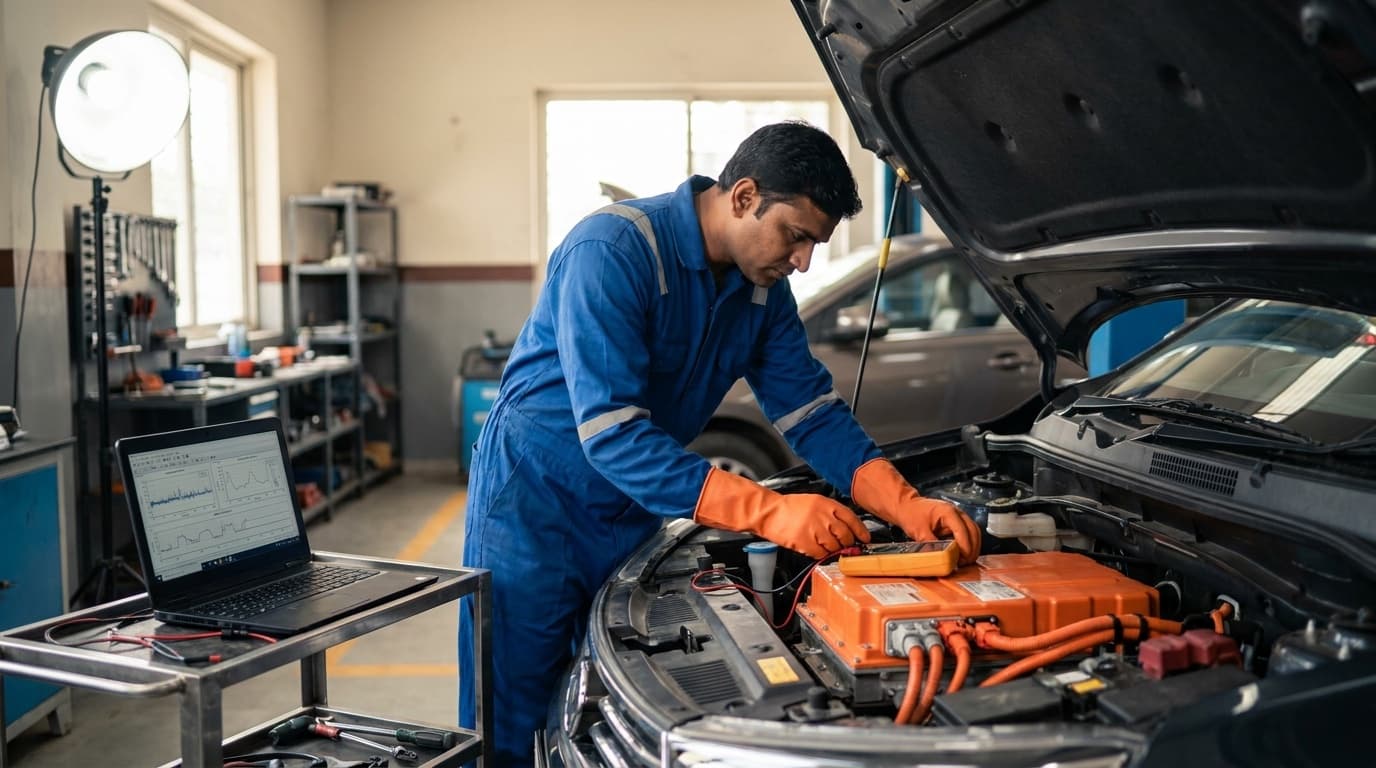
- High-voltage diagnostics and battery health checks.
- Thermal-management and coolant service for the battery and electronics.
- Cabin filters, 12V systems, wipers and the everyday consumables that never went away.
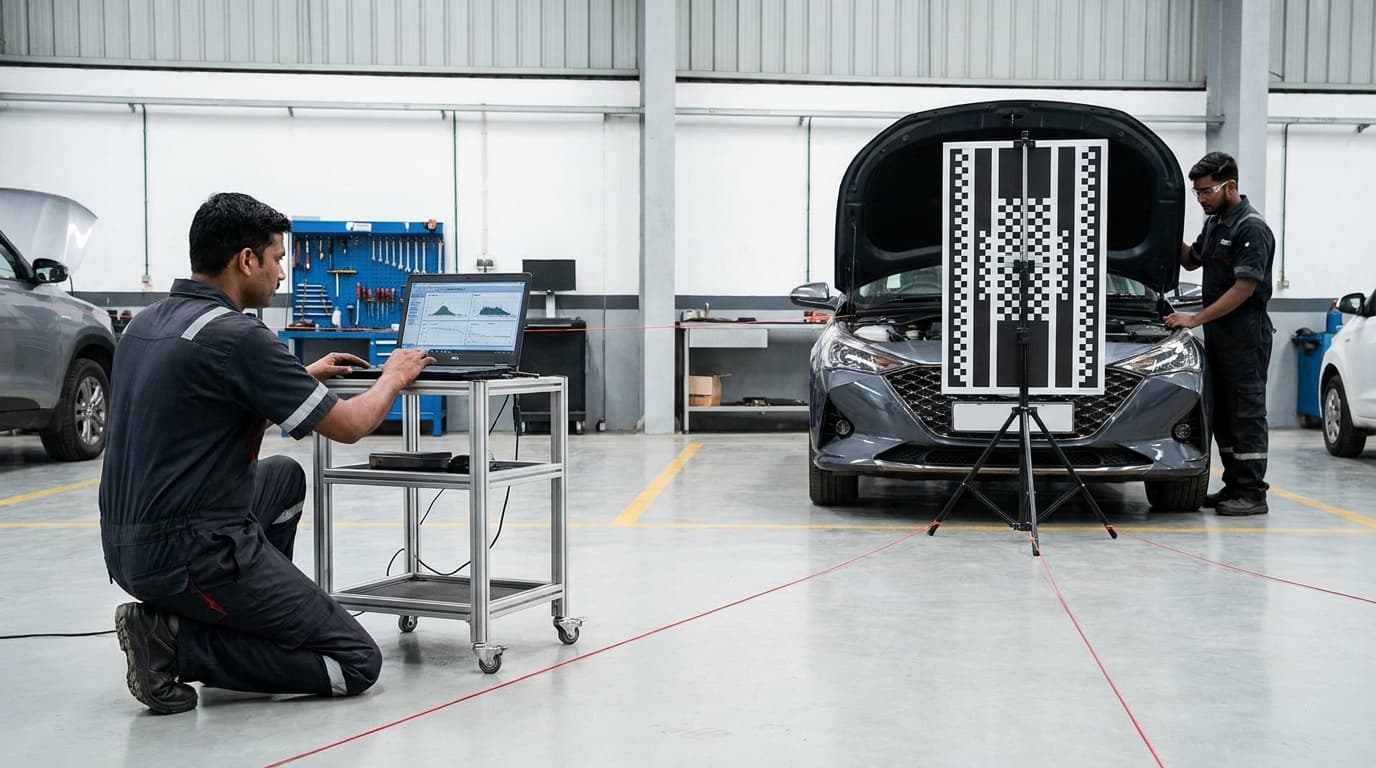
- ADAS calibration, which is frequently bundled into EV and modern-car work.
- Software and firmware updates.
Start with what you can safely do today
You don't need a high-voltage bay to start serving EV owners. Tyres, wheel alignment, brakes, suspension, air-conditioning and cabin work, the 12V battery, bodywork, ADAS and basic diagnostics are all open to you right now on an EV. Doing them well builds trust with EV owners and keeps footfall — long before you invest a rupee in high-voltage capability.
Win the EV owner's trust with the work you can already do, and you'll be first in line for the work you learn next.
— AIAWA
A phased roadmap
- 1Serve EV owners now with the non-high-voltage services you already do well.
- 2Send your team through high-voltage safety and EV service training (see our companion piece on the technician gap).
- 3Invest in diagnostics and tooling for the EV makes you see most.
- 4Add high-voltage-capable bays and battery services once local volume justifies it.
Where AIAWA fits
The fundamentals of good service — diagnosis, honest pricing, quality work — don't change with the drivetrain. What changes is the tooling, the training and the confidence to take on jobs many workshops still turn away. Through group training, negotiated equipment pricing and a collective that reads the market together, members can invest with evidence rather than guesswork — and upskill without carrying the full cost or risk alone.
More from the blog
All articles Policy
GST 2.0: what a flat 18% on parts means for your workshop
The September 2025 reform put nearly every spare part at a single rate. Here's how to turn that clarity into cleaner billing, fairer prices and healthier cash flow.
 Technology
ADAS calibration: the high-value service your bay is missing
As Bharat NCAP pushes driver-assist tech into everyday cars, sensor recalibration is quietly becoming routine work — and one of the best-paid services an independent bay can offer.
 Skills
The EV technician gap — and how to close it in your workshop
India will need tens of thousands more trained EV technicians within a few years, while only a small share of the current workforce is ready. That gap is a genuine opening for independent workshops.